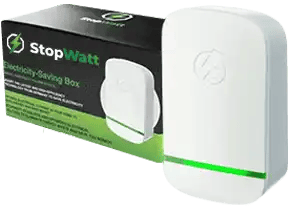
StopWatt is a small device that plugs into a wall outlet, marketed as a whole-home "electricity stabilizer." The manufacturer describes it as reducing electrical noise and improving power quality in a home's wiring.
Power Line Filter
This device has not been independently tested by us, and we found no independent (non-manufacturer) testing referenced anywhere in its own marketing materials. We're not able to confirm any of the manufacturer's efficiency or savings claims.
We link to authorized retailers and may earn a commission at no extra cost to you
Company & addressNot disclosed anywhere on the manufacturer's site
Independent testingNone found
MechanismAddresses "reactive power," which residential meters don't bill
We're not showing package pricing for this listing yet — the manufacturer's site displays a steep, frequently-changing discount off a listed "regular" price that we can't confirm reflects a real, sustained selling price.
60-day money-back guarantee, per the manufacturer's stated terms
What the manufacturer claims
According to the manufacturer's own sales page, StopWatt: "stabilizes electrical current," "reduces dirty electricity," provides "on-the-spot reactive power compensation," and "absorbs harmonic waves." The site states it helps "dramatically lower energy consumption" and describes it as "approved" to work in all 50 states, without naming which body issued that approval.
Things worth knowing before you decide
What this type of device actually is
Based on the described mechanism (reactive power compensation, harmonic filtering), this class of product is generally a small power-factor-correction capacitor. That's a real, established piece of electrical engineering — but it primarily matters for large industrial/commercial equipment with heavy motor loads. Residential electric meters in the US almost universally bill customers for real power (kWh), not the "reactive power" this type of device addresses — meaning a device like this typically has little to no effect on a home electric bill, regardless of how well it filters electrical noise. We're describing the general mechanism, not testing this specific unit.
A regulatory history worth knowing
The U.S. Federal Trade Commission has had a specific rule regarding energy-saving device claims since 1979: it is "an unfair or deceptive act or practice to represent... expected energy savings... when consumers will not ordinarily realize such savings." The FTC has brought multiple enforcement actions against similar plug-in and add-on "energy saving" devices over the years. This is general regulatory history about the product category, not a claim about this specific manufacturer.
What to know before buying anywhere: the manufacturer's site uses a clock-style expiring discount ("expires at midnight," shown as a static claim rather than a real deadline) and customer testimonials citing specific dollar-amount savings ("saved $35") without any stated methodology for how those figures were measured or whether they're typical. No physical company address is listed anywhere on the manufacturer's site — only a support email.
Looking for something we'd actually recommend?
We can't recommend StopWatt. If your actual goal is understanding or lowering your real electricity usage, here's a real, well-reviewed option from an established brand instead: P3 International Kill A Watt Electricity Usage Monitor.
What it actually is: a plug-in meter — you plug it into the wall, then plug your appliance into it. It directly measures the real kWh consumed, voltage, amps and Hz over whatever time period you choose (it has a built-in running clock), and shows the real cost based on your own electricity rate. It doesn't claim to save you power; it just measures it honestly, so you can decide what's worth unplugging or replacing.
Why we trust it: P3 International has sold consumer electricity-usage meters since the original Kill A Watt launched in the mid-2000s, and the category it created is commonly referenced by U.S. utility efficiency programs as a way to measure real household plug loads — the opposite of StopWatt's "reactive power" framing, which describes something your utility meter doesn't actually bill you for.
Clicking "See it on Amazon" opens a live Amazon search for this exact product — not a specific listing we control — so you can compare current sellers, prices and reviews yourself before buying.
See it on Amazon →As an Amazon Associate, we earn from qualifying purchases.
Living Well Weekly is operated by Bloomsably Digital Marketing Agency LLC. 3308 Piping Rock Street, Tallahassee, FL 32309, United States · contact@livingwellweekly.com
Product specifications and manufacturer claims are as disclosed by each manufacturer. Results and product performance may vary. A small number of listings on this site are dietary supplements; where featured, they carry their own FDA disclosure directly on the product page.
We use cookies for essential site function and, with your consent, for advertising measurement via Microsoft Advertising. See our Cookie Policy for details, or manage your choice anytime.